

Dizziness Vertigo – If you have dizziness, you may feel lightheaded and disoriented. You may feel like you are about to lose your balance. Many things can cause dizziness, such as anxiety or reactions to medications. However, dizziness may be a symptom of an underlying medical problem. If you experience frequent or severe dizziness, talk to your doctor.
Dizziness Vertigo
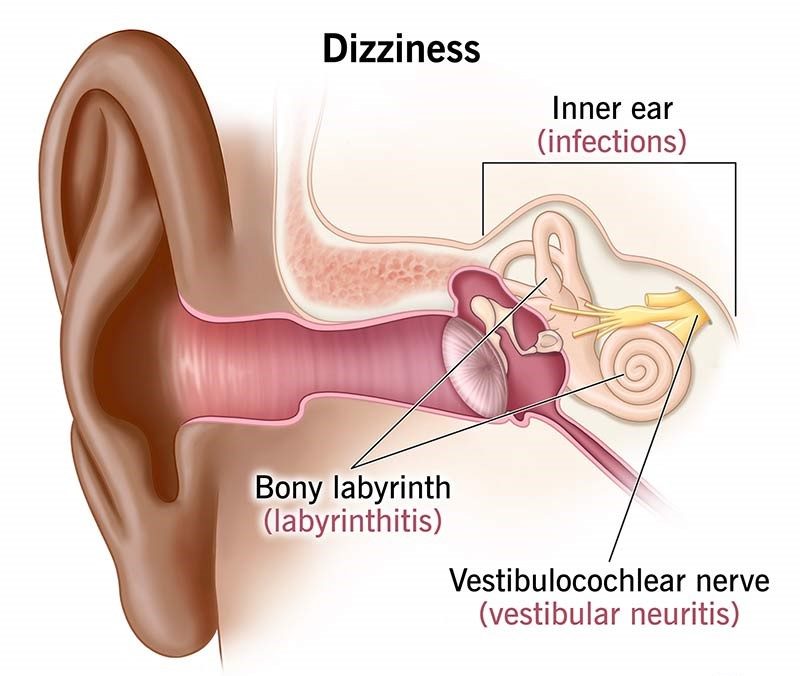
Dizziness Vertigo is feeling light-headed or unsteady. Many things can cause dizziness. Inner ear disorders are a common cause. Inner ear diseases include inner ear infections (top right), labyrinthitis (middle), and vestibular neuritis (far right).
Dizziness – What is Vertigo?
Healthcare providers describe dizziness as having impaired or disturbed spatial orientation. You can define dizziness as feeling light-headed or light-headed. You may feel like you need to sit down before you fall. Frequent or severe dizziness can affect your quality of life. People experience dizziness in different ways, including:
- Feeling faint.
- Nausea.
- Feeling unsteady on your feet, as if you’ve lost your sense of balance.
- Feeling disoriented or confused.
Possible Causes?
Dizziness – What causes vertigo?
Dizziness Vertigo happens when something affects your sense of balance. A stable sense of balance requires a steady flow of information through your ears, eyes, tissues, and central nervous system. Your central nervous system uses this information to tell your body how to maintain balance.
When something disrupts the flow, your central nervous system may process information incorrectly, and you may feel unsteady and dizzy. Inner ear disorders, neurological conditions, medications, and even stress can cause dizziness.
Inner ear disorders
- Benign paroxysmal positional vertigo (BPPV). People with BPPV feel a spinning sensation when they move their head.
- Labyrinthitis. Inflammation in your labyrinth, the inner ear system responsible for hearing and balance.
- Vestibular neuritis. This disorder affects the vestibulocochlear nerve of your inner ear.
- Persistent postural perceptual dizziness (PPPD). Dizziness triggered by things or activities going on around you, such as being around crowds. PPPD symptoms come and go.
- Inner ear infections. Inflammation in your inner ear caused by viral or bacterial ear infections can block the messages your inner ear sends to your brain.
Other medical conditions
- Anemia. Anemia is not having enough red blood cells. Dizziness is a common anemia symptom.
- Acoustic neuroma. A benign tumor that can affect your hearing and balance.
- Meniere’s disease. A disorder that affects the inner ear, causing dizziness, hearing loss, and ringing in the ears.
- Benign positional vertigo. A type of vertigo that occurs when you change positions, such as lying down or getting up.
- Medication side effects. Some medications can cause dizziness as a side effect.
Other causes
- Dehydration. Not drinking enough water can cause dizziness.
- Low blood sugar. Having low blood sugar can cause dizziness.
- Medication side effects. Some medications can cause dizziness as a side effect.
- Neurological disorders. Some neurological disorders, such as multiple sclerosis, can cause dizziness.
- Physical injuries. Some physical injuries, such as a concussion, can cause dizziness.
What are the possible complications or risks of not treating dizziness?
Dizziness may not seem like a symptom of a serious problem, but you should still talk to a doctor if you feel dizzy frequently:
- Dizziness may be a symptom of medical conditions that may worsen if left untreated.
- Dizziness is a balance problem that increases your risk of falling and possibly getting injured.

